Tuesday, August 17, 2010

How Natural is Natural?

Well, the number of cosmetics out there touting the "natural" label is growing by the day....it's the new "thing"...which should make me happy, but.....
BUT (and that's a big but), most of them simply aren't.

There's an ever growing number of pretty sounding concoctions out there in bright shiny bottles with reasuring labels like "organic" and "vegan" plastered all over them, which have as much resemblance to the truly natural bottles of  flower extracts and herbs in my workshop as, well,  the bottle of commercial toilet cleaner my mother stuck in my cupboard many years ago in the hope I'd eventually use it.


I've spent over 20 years researching and developing natural perfumes. I've studied herbs and aromatherapy oils,and pored over ancient texts full of fascinating ingredients...and spoken to thousands of people at my stalls and on my website about natural perfumery and what it means.
And for years, the conventional perfume industry has belittled what we natural perfumers do, claiming it is archaic, and only modern aromachemicals give you a truely beautiful perfume.
Then all of a sudden, they've discovered that we're on to something! And all over the place, you suddenly see so called "natural" perfumes with bright pretty flower pictures!
A collegue pointed me towards a company I'm not going to name the other day....delightful packaging, pretty sounding scents...and "Beauty Habit", where they are sold, writes the following:

"L### & T## believes that natural formulas should function and not fail. These formulas have been vigorously tested for performance and stability.Each product is loaded with the very best natural and organic ingredients, while delivering a luxurious, skin-nurturing experience." And in the listing for their handcreams, list the scent as "botanical perfume blend".

But hang on a minute, the bottles contain completely clear fluid for starters (And natural perfumes just don't come in clear...)....let's have a look at the ingredients of one of them, ": "Vanilla Orchid, White Musk, Jasmine, Ebony Woods, Natural Alcohol"

OK, for starters, that's not an ingredient list, it's a fanciful list of the notes in the fragrance.
There is no such thing as vanilla orchid, white musk or ebony wood. And wtf is natural alcohol supposed to be? As opposed to un-natural alcohol?
These perfumes aren't natural. Not even nearly natural. Yet the advertising sells them as such, loud and clear. 


And it frustrates the hell out of me. Because people believe what they see written. And it seems, you can write whatever you want and get away with it. Loud and clear.

Mmfph.


Did you know that you can call anything vegan if it doesn't have animal ingredients in it? plastic gumboots are vegan by that definition!
And "Natural" can mean just about anything. I did a bit of research into natural flavours some time back, and discovered that a natural flavour can be made entirely of individual chemicals, as long as said chemicals were originally extracted from a natural source!
And mind you, that source doesn't have to have anything to do with the the fruit of vegetable it's imitating!

The Truth Seeker writes:  Natural and artificial flavors are now manufactured at the same chemical plants, places that few people would associate with Mother Nature.

To me that seems like cheating. All chemicals are originally extracted from natural sources. It is the degree of processing that takes them from natural to artificial.
Raspberries are natural. raspberry juice is natural. Raspberry ketone is a scent chemical that can be extracted from raspberry juice, or also made by chemical process from other chemicals. It is a white crystaline substance, that can be dissolved in alcohol and used in very diluted form in fruity scents to give the impression of raspberry....
Is it natural? I'm not sure. I have two kinds of raspberry scented ingredients in my workshop:
One, an alcoholic extract of raspberry, which is dark brownie red and slightly sticky, and needs to be filtered before I add it to scents. And the above said raspberry ketone, a strange little bottle of white powdery crystals....the crystals themselves have no scent until disolved further in alcohol.

There are a growing number of companies that are useing natural isolates like raspberry ketone in their perfumes too. I'm not sure how I feel about this. Like many botanical perfumers, I crave some notes that simply aren't available on the market....there are no natural violet extracts, and some fruit notes like "dewberry" simply don't exist in natural form. 
And it is a very tempting idea to follow along the "Natural Flavour" lines and start recreating these scent notes useing individual chemicals extracted from natural sources. But I feel uneasy about it.
The biggest question for me is where do we stop? When does a perfume go from being a real natural product crafted from exquisite absolutes and essential oils, to being, in reality, merely an artificially created scent concoction made purely from ingredients cooked up in a science lab like all of the others out there....

I'm not sure what the answer is. I'm experimenting with isolates, and keeping an open mind...but it does leave me feeling uneasy.
I feel somewhat guilty, as if I were experiementing with illegal drugs.....

I do know one thing for sure: If I do end up useing natural isolates in any of my perfumes, I will be honest and open about this.


Thursday, August 5, 2010

Teaching Natural Perfumery

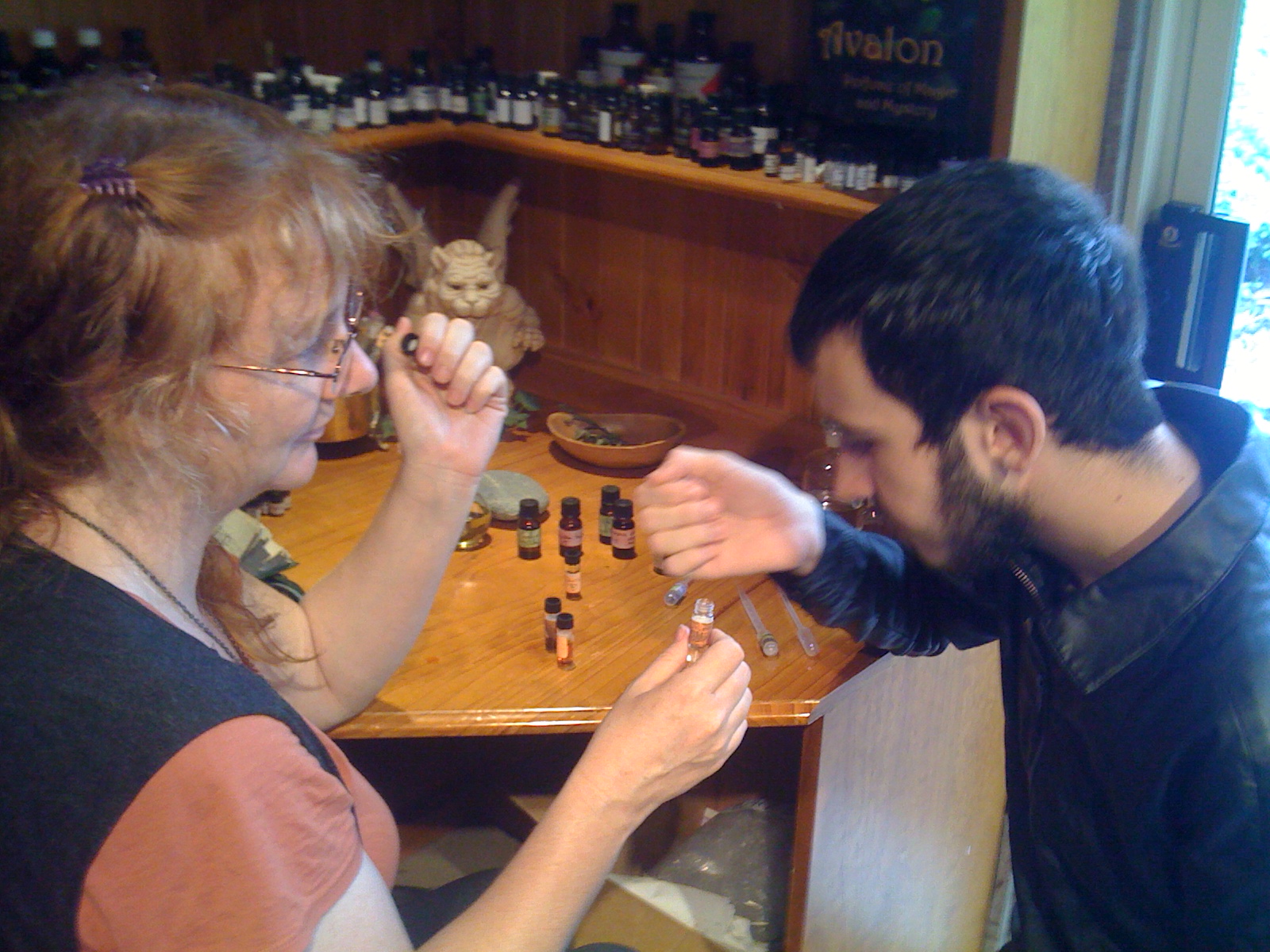
I've been asked many times if I teach classes on natural perfumery here in Australia....and I've finally decided to give in and do just that...
It seems there is a growing number of people out there yearning to learn how to play with all of these delightful natural ingredients...and realistically, there is a vast amount of stuff to learn about useing them safely and truly creatively if you want to make perfumes. And books can only take you so far.
There are a number of people running natural perfumery classes overseas, esp. in the States, but here in Oz, it's still a very new art.
So I'm now making lists and collecting ideas on what and how to do this....

Obviously Safety in working with natural perfumery materials would be one of the first and most important things I would want to impart, but beyond that there are so many different topics and different approaches I can think of...
I've read course descriptions from other perfumers, and they sound really in depth. Covering everything from perfume history, to details about every essential oil in exsistence, creating vertical accords and so much more....

I don't think it would be useful to teach another course along the same lines...some of these are already run by correspondence and easily accesible via the internet...(Anya McKoy has a very detailed one, and so do Mandy Aftel and Lyn Ayre)
And it would like re-designing the wheel sorta....

I would however like to share a bit more my own personal style and creative approach to making perfumes....
What I do think would be useful to teach is the actual hands on how to's of  perfume making. Introducing the individual components in small groups, and showing how combining them in different ways can create so many different effects...
In fact I think it may be the best to run a series....based around creating to certain themes maybe....each a day where you can smell and play with the ingredients that are used to create specific notes and genres in a perfume.....where you can also take home your own creation at the end of the day.

Themes could be:

-Flower perfumes, Scents for Blokes, Gourmand Scents....

And then of course there's the whole chapter of combining Aromatherapy and Perfume.....
Now that's really big chapter. 

My question to all of you now is :

What would you like to learn in a perfume workshop?

(And If you've taken part in other classes overseas, maybe you'd like to share what you thought worked well? What else would you have liked to learn?)

Monday, August 2, 2010

Perfumery Materials: Co2's

Like most perfumers, I'm constantly searching for new and unusual ingredients to work with...
And one of my latest area of exploration is so called CO2's.
It is an extraction method that was first developed for the flavour industry, whereby carbon dioxide is used to extract concentrated materials from spices, fruits and nuts. In recent years it is also being used to create scent materials from flowers like jasmine.
Some perfumers are beginning to use them exclusively, instead of the more common absolutes, which use solvents such as hexane, believing that the method of extraction delivers a gentler and safer alternative.
Personally, I don't think this is necessarily true. Absolutes generally don't contain much, if any of the initial solvent, and these are not that toxic to start with.
 What makes CO2's interesting to me, is that useing them gives me a far greater pallette to play with. I recently obtained a number of really interesting CO2's from a European company called Evonik, delightful things such as honey bush, jasmine tea and hazelnut! Totally yummy!
 The only downside to them is that for some reason, they don't seem to have the same staying power as many absolutes, which is always a big problem in natural perfumery. I'm not sure why this is, but I have generally found this to often be true for Co2's.
The scent is also often softer, and they also don't seem to disolve very well in either alcohol or in oil.
You can get a wide variety of different forms of CO2 extract too...I have found everything from clear liquids to the solid green stuff you see in the photo, which is a nice green tea CO2 from White Lotus Aromatics.

There are also a lot of CO2's which simply don't work for perfumery. I got very excited when I first stumbled upon natural flavourings, but quicly discovered that many of the food CO2's have great flavours, but not much in the way of scent. Which makes them great as, well, flavours, but not perfume ingredients.

It is however a fascinating new area in natural extracts, and hopefully, companies will start producing more that are aimed at the perfumery market in years to come...(how about a violet flower CO2 eh? hint hint!!!)

Wednesday, July 28, 2010

Thoughts on Natural Perfume Design

The Mystery of Musk project has given me much food for thought...especially about the challenges we face designing with naturals.
So I thought I'd share a few of them with you....

Botanical or Natural Perfumery is very different from conventional perfumery.
There is the more obvious point that we use natural ingredients as opposed to the artificial chemicals used in modern perfumer laboratories of course. And this tends to lend a depth and beauty to natural perfumes that simply can't ever be fully recreated by artificial ingredients....
But it also has a number of unique challenges that many newcomers to the art don't realize are there at first.  Keep in mind that these are my own observations from over 20 years of fiddling with natural scent ingredients...and they are my own opinions, which may differ greatly from what you will read in some of the books out there. There are many different approaches, and different things work for different people. Hopefully this will inspire some more discussion on the various perfumeing lists!

Complexity:
One of the biggest ones is that each ingredient used in botanical perfumery, is actually already a complete scent all in itself.
Each essential oil or absolute, is an extract of an incredibly complex botanical scent creation, custom designed by Ma Nature to entice and delight the senses of an incredible array of insects and mammals.
Modern perfume chemistry started by attempting to copy Mother Natures ingenious complexity, primarily for money reasons. It is far cheaper to create an artificial copy made with individual chemical components, than to obtain say rose otto by the time honoured process of growing the flowers, harvesting them, useing the time and tons of flower petal consuming process of enfleurage to then obtain only a few kilos of the precious substance....
But the chemical version is never as good. Ma Natures masterpiece is simply to complex and clever to be fully re-created.
But the challenge in natural perfumery comes from this very complexity.
In the over 20 years I've been playing with natural perfumes, I've mixed so many blends that looked lovely on paper...but that turned out to be muddy, unpleasant or even downright nasty messes once I'd actually combined the ingredients! And there's very good reasons for this:
When you start to blend say rose otto and jasmine absolute, you are combining not one or two scent molecules, but what amounts to two incredibly complex and complete perfumes!
Think about this for a minute......
Each time you add another natural ingredient to the mix, you add not one note, but a complete complex array of hundreds of scent layers, each with the potential to harmonise or clash with any of the other hundreds of scent layers already at play in the mix!
It's a bit like playing ultra-multi dimensional chess.
You have to understand and somehow keep in your mind, each of the many many scent layers each indivisual oil or extract is made up of, and see how they will combine and work with each other.
Add to that that once the ingredients are combined, they go through a further chemical combining process, and often change quite substantially as they interact with each other.
I've lost count of how many times I'd created something that smelled lovely...only to come back to it after a week or so to find that it had somehow morphed into something 'orrible!
The reverse can sometimes also be true of course, and sometimes you accidentaly create a beautiful scent that was not at all what you originally had in mind...But usually it's the lovely turning into crap that happens.

Top Middle and Base Note classification
This is one of the primary ways that scents are classified and designed nowadays. You will find mention of the concept in most perfume reviews and technical perfumery handbooks. and even the books on I have found on Natural perfumery contain lists that attempt to place all of the imany essential oils and absolutes we use in one of these three categories.

The problem with this (in my experience), is that it simply doesn't work.
As I said before, each and every ingredient we use in botanical perfumery, is in itself a complete perfume creation, with top base and middle notes all of it's own.
Some of course contain predominantly top notes, others more base notes, but this in itself is not enough information to be able to work with it. Realistically you need to understand and know the various top middle and base notes that each ingredients contains so you can marry them to the appropriate combination of top, middle and base notes that make up the other essential oils or absolutes you are useing.

Designing with Accords
This is another concept that is basic to conventional perfume design. The idea is to first create perfume notes or "accords", such as "Green grass", "Oriental" or "White Flowers" and then combine them to create a Smokey, Oriental perfume with a White Flower heart.
Sounds good eh? Trouble is, it often doesn't work. Once you have combined the three accords, you suddenly end up with either a muddy mess, or completely new sharp nasty notes sticking out at various layers which don't seem to have been present in the original individual accords!

There's two reasons for this:
Firstly with creating an accord. If you go back to what I wrote further up about complexity, you can see the difficulty this presents. Of course it's not impossible, but it can be a very involved and trial and error process.
And there are many "notes" that are close to impossible to create, simply becuase the individual ingredients are so complex that you cannot create anything "pure". For instance, I crave "Green Grass", which was a perfume oil favourite of mine as a teenager. You cannot buy "Grass" essential oil, and tincturing it doesn't seem to give you a real "grass" scent". And I have not been able to find a combination of other naturals that gets anywhere near the fresh cut grass scent I'm searching for. (At this point of course any number of other natural perfumers may chime in and tell me I'm wrong...I'm hoping they do! And that they will be nice enough to tell me how!!)
But it's a good example of the problem.
Realistically, you have to work with interesting notes, that do not fit clearly in any simple category because they are simply too complex to resemble any one clear note or accord. Your "White Flowers" may have many other subnotes to it that are neither white, nor very flowery...but still really pretty overall.

The second stage of the problem comes when you start to combine the accords you have created.

 Taking the White Flowers accord idea, once you combine it with another accord, you may well find that the woody acrid note that was originally just barely perceptabley in the the background, has suddenly become a totally in your face blast of burnt plastic. This will have happened because it ganged up with another sweet plastic note from the oriental blend that you didnt even know was there! Or maybe the slightly decomposing background note in the Green Grass accord that just added that touch of "natural" when you created it!
Often it would be just one oil or absolute that was destroying the plan...but the sheer number and complexity of the ingredients would make it almost impossible to track down which one it was.
I started out working with accords, but in the end I took a few steps back, and nowadays will usually add ingredients one by one, and take detailed notes on the effect they have on the overall mix. Which means I end up with a whole collection of trial blends of the various layers and stages of each perfume in tiny bottles!
My latest creation for the Mystery of Musk project is a perfect example! It's various stages fill up a whole shelf all on their own, not to mention the myriad of tables, notes and scribblings I wrote in the process.
(If you're interested in hearing more about this,  Monica Miller of Skye Botanicals will be writing more about the trials and errors in the botanical perfumeing adventure soon!)

Anyway, hope you enjoyed reading a bit about how I approach botanical perfumery....(And yes, I am writing a book on the subject...I'll be posting more bits and thoughts as it grows!)

Happy Sniffing!

Saturday, July 24, 2010

Mystery of Musk-Thoughts and other Perfumes

Well, the Mystery of Musk project is coming to a close...though there's still the odd review trickling in. Seems it's been a tad overwhelming for some of the reviewers to work through all of the 12 entries in the originally planned time!
As for me, I'm exhausted! It's been such an adventure...
And it has taught me so much....
First of all of course, it was wonderful to get so many positive reviews, and it blew me away how many other artistic projects in form of poetry and visual art it stimulated!
You've all read about my own trials and tribulations in creating my own contribution to the project, "Craving" in previous posts....
So you can imagine how fascinating it was for me to then get to smell what all of my collegues had come up with! And a few of you have written asking me about my impressions of the other perfumes


So here's a few of my thoughts and observations:


First of all, I was fascinated with how diverse the 12 perfumes are!
We all seem to have taken different paths in our creations, and have ended up with completely different scents! What really surprised me, is that all, except for mine and Adams, are florals!
This really surprised me, as I don't really associate the idea of musk with florals at all....

My own experience of musk perfumes has been things like Kiehl's Musk oil, "Merely Musk" by Coty and others along similar lines, all of which are very linear, dry woody, well, "Musk" scents.


And originally, this was the kind of Scent I was trying to re-create useing natural ingredients.
I very quickly came to the conclusion that this was impossible, and the varied "Mystery of Musk" creations of my collegues seem to back me up in this.
Modern day "musk" scents are created useing isolated chemicals that immitate parts of the infamous musk scent originally obtained from musk deers private parts. They don't actually smell much like the far more complex and "dirty" natural musk...they are really more of a gentler, cleaned up and far more unobtrusive echo of the idea of musk......
And being made of isolated chemicals, there is no way you can recreate them useing the incredibly complex ingredients we use in natural perfumery.
The closest to modern day musk scents, is Ambrette seed absolute or Co2 extract. This lovely ingredient, when applied to the skin has just that soft, gently pheromonal warmth that we have come to associate with the idea of "musk".
But in itself it is not a perfume. It simply isn't intense enough to carry a scent all on it's own.
Which meant that I, like all of my collegues, ended up creating perfumes that have musky notes, but were in themselves not pure musks.
And this is where it got interesting.

Anya McCoy, head of the Natural Perfumers Guild had listed a variety of natural plants that have musk notes in them. And all of us MoM perfumers used ingredients from this list.
But which ones we chose, and what other ingredients we added led to the incredible degree of variety we ended up with.
As I wrote in the beginning, most of my collegues ended up creating floral perfumes, with varying degrees of musky base notes to them. In a number of cases, I get the impression that the perfumer became more inspired by the non-musk ingredients and ended up conentrating on the floral or fruit notes, so that the musk became more of an afterthought than the central theme.
(Some of the reviewers admittedly seemed to think I had done the same with the chocolate and gourmand notes in "Craving" too...)
On the other hand, it is also very obvious that this taste for florals is shared by a large number of perfume lovers out there! The comments by readers echoed the reviewers love and interest for each floral dominated MoM entry!

Adam's "Dionysius" is the only other MoM scent that to me wasn't either floral or fruit dominated.


The other thing I learnt from from reviewing the scents-and also from conversations with one of the reviewers, Denyse Beaulieu from "Grain de Musc", is the concept of linear versus multi faceted, changing design in the various layers of a perfume.

My own taste I now realize, runs to linear design. I prefer simple scents that follow a specific theme, and I tend to design perfumes with matching or at least closely echoing and complimentary layers.
Whereas others of my collegues seem to favour multi faceted scents that change considerably as they wear.
This doesn't mean that I didn't like them mind you...some of the multi faceted MoM scents had a multitude of pretty facets that, while different, were like a multi coloured caliedoscope of varying but harmonious changing chords...
but there were a few where the facets were too varied for me to find a common tune, and the overall effect for me was a tad clashing.


This concept finally explained why so many famous perfumes irritate the hell out of me instead of enchanting my senses.


Many of the classics, like Madame Rochas and Estee Lauders Aromatics Elixir, have what to my nose are intensely clashing notes that create a nasty clamour of scent that I really dislike.
Whereas mens colognes like "Grey Flannel" and Eau Savage and the simple musks I mentioned in the beginning have simpler, far more linear and less cluttered scent characters that I am far more comfortable with.


And I stress here that I am talking merely of my own taste in scent. As the so widely varying reviews of the various perfumes have clearly shown, perfume really is a matter of taste, not something you can easily give an objective judgement of.

The other thing I learnt is how difficult it actually is to write a review about a perfume!
Once you get beyond the like/dislike mark, it's really difficult to find the language to adequately describe what you are smelling. I've always disliked traditional perfumery language, and have often, if not usually found that conventional perfume reviews seem to talk about notes that I simply don't smell in the perfumes at all. To the point that I have often wondered if my nose works differently to other peoples. And to be honest, I found the same thing reading some of the reviews from the mystery of musk project!
But when I sat down to write my own impressions, I had to admit that writing a decent perfume review is bloody difficult! So I would like to extend my admiration to the dedication and effort that the reviewers for the Mystery of Musk project put in!
It's been a great experience, and has given me much delightful food for thought and inspiration for some future projects as well!

To finish off, I'd like to share a bit about some of the ones that caught my interest most from the Mystery of Musk project. (They are also not necessarily the ones the critics raved about the most, which I found interesting too).


The first one I will write about, is  from one of the  new comers to the Natural Perfumers Guild:


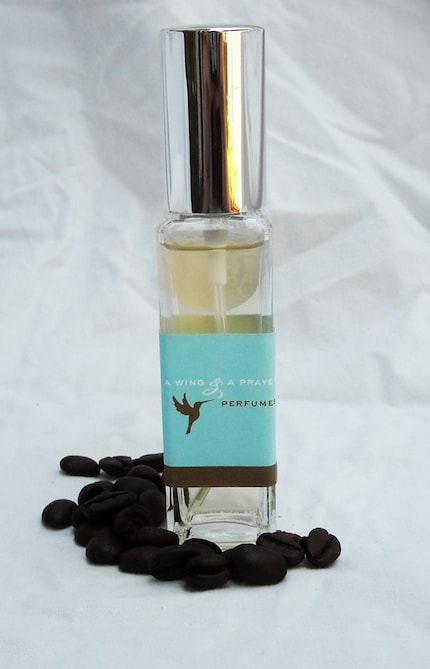
"Tallulah B2" by Jane Kate of  "A Wing and a Prayer Perfumes" 
is what I can best describe as a "baby powder rose musk". It surprised me with it's gentle softness, a truly delightful scent and by far the softest and lightest of all the MoM entries.
It very cleverly uses a combination of ingredients to create a sweet, powdery note that to me smells the way Orris root based perfumes are supposed to smell but rarely do. The citrus top notes are subtley enough applied to merely lend a touch of brightness to the composition without being obvious or subtracting from the gentle powdery lady-like musk itself. 

"Musk Nouveau" by Charna Either of Providence Perfumes. This one reminded me of a sweet, boozy coctail! It's warm a deep and fruity, with tightly woven accords of yummy wicked things! It's sweetness deepens on my skin and a deep fig liqour with interesting bytones.....it's a lovely, slightly evil scent this one!


The third one is "Musk No5" by Roberto Dupetit
When I first smelt this one it struck me as more of a floral aldehyde than anything else. And it fascinated me because I had absolutely no idea how he had created it! Turns out I wasn't far off the mark.  Alfredo uses natural isolates in his perfume, which has definitely piqued my curiosity. After a more floral opening, it actually reminds me of the original No5 by Chanel, which I wore and loved in my youth. I was fascinated to find this in a natural scent, as No5 was one of the first perfumes to use artificial aldehydes in high quantities. The floral notes follow the aldehydes into the dry down, where the scent becomes drier and warmer and a sweetish by note.


I'll be posting the last missing reviews for "Craving" as they turn up....


And thanks to you all for sharing my journey into the world Wild Creation and of Public Reviews!

Friday, July 9, 2010

Mystery of Musk-Craving Reviews part two

Here' some more of the reviews gathered from the many blogs and sites involved in the project...
This is such fun! It's the ultimate kick for a perfumer to hear how her child she so carefully nurtured to maturity, and then nervously set sail into the wide wide world is faring....
Craving has visited all over the world....the US, France, Germany....and now I'm getting the postcards home....

"Hi Mama, I'm doing fine! This professionally trained reviewer from "Grain Du Musc" is complaining that I am tempting her to add too many calories to her diet and threatening to blame me for the destruction of her bikini figure, but I think she means it as a compliment! One of the others has decided I'm full of coffee, but she likes me too!
Alfred and I went to Paris together, where he told me stories about his youth where we drank congnac in one of those quaint little bars and he muttered something about "Desire for Desire" while looking deeply into my eyes....OK, so I'm not a virgin any more...figure you didn't expect me to be, what with all the pheromones and stuff you filled me up with right from the start...
I'm having a great time out here in the world, playing with noses and wreaking a little bit of havoc everywhere I go!
Hope your having a good time too, and give my love to my little Brother growing in the workshop! 

Love Always, your baby Craving"


Denyse Beaulieu from "Grain du Musc" writes:

"Ambrosia from Perfume by Nature looks like a perfectly lovely, kind and charming lady… But I suspect she’s just a wee bit evil. Her perfume is called Craving. It should be renamed Gluttony, in the fullest, Nigella Lawson, chops-and-finger-licking meaning of the term. And gluttony, you know, is one of the seven deadly sins… Unlike many of the natural perfumes I’ve been sampling, Craving doesn’t fall apart on the blotter. In fact, it might inspire you to chew up that blotter – so imagine the effect on skin. It was all I could do not to sprinkle the contents of the vial on anything soft and creamy that could actually be devoured without running foul of the law, or not to rush out to the corner patisserie, which is unhelpfully open on Sundays. Ambrosia, think of my hips!
With its roasted nut accents and sandalwood adding a milky-smoky touch, Craving is too much of a gourmand to actually rate as a musk in my book, but Ambrosia has well understood the profoundly animalic nature of its core material, cocoa absolute. Some musks actually do have chocolate facets, and castoreum definitely carries more than a whiff of dark chocolate. She’s also sussed out the common facets between dark chocolate and vetiver (also expressed in Lalique Encre Noire), and has used the latter to tug the formula out of purely foody territory, adding another layer of darkness to the chocolate and caramelized nuts.
The actual animal note in Craving is hyraceum, the stuff I though was driving my Siamese girl wild. It isn’t, since she didn’t turn into a wanton minx when she took a sniff of Craving. I can’t say as much for her mama, though my libido was distinctly more attuned to getting a sugar high than mauling the friend who was with me (thank God: I doubt our friendship would’ve survived it). Whether you find that the Craving in question veers more towards sex or chocolate (good substitute, never have to worry whether it’ll still respect you in the morning, and call you back the next day) is a matter of personal settings.
Meanwhile, Ambrosia, if that bikini makes me look like a muffin, I’ll take it up with you."


Sugandaraja from Basenotes writes :
"Craving opens with a singularly delicious accord - coffee, chocolate, and toasted hazelnuts. Sweet but not syrupy, it's the olfactory equivalent of drinking a capuccino and eating a box of hazelnut chocolates, with none of the calories that come with that.
Coffee and me have had a rough history when it comes to fragrances. For some reason, the lightest whiff of coffee turns my stomach, even through freshly brewed coffee is a smell I find quite pleasant. This may be the first coffee fragrance that I enjoy. Whether it's due to its natural origin or not, I have no clue, but it's delicious.
In the drydown, a good deal of the sweetness retreats, becoming drier and more nutty. A delicate amber emerges, and subtle woody nuances play in the background, with a hint of something rooty - vetiver, perhaps?
Perhaps worthy of note is what I don't smell. Namely, musk. Not even a little. That being said, I'm very happy this project allowed me to sample this delightful gourmand oriental."


And Alfred Eberle, one of the reviewers from the Natural Perfumery group on yahoo gave this lovely description:

This perfume flew me straight to Paris. 
I have only been to Paris once, but I was struck by its essence when I
was there- the sights, the sounds, the tastes, and the smells. 

By some marvellous witchcraft, Ambrosia Jones of Perfume by Nature has
brought me somehow to Paris, and playfully combined a perfectly-
balanced impression of chocolate, cognac, hazelnut, longing, desire,
and perhaps a bit of café-au-lait so that one is immediately gripped
by the simultaneous desire for all these things and yet something
beyond them all - perhaps for the desire for desire itself.

I found in the case of this delectable perfume that the musk idea was
here expressed not so much by the use of musk-smelling botanicals as
much as by the suggestion of musk, the allegory of musk, the kind of
ineffably sexy musk possessed by elegant decadences such as fine
chocolate and fine wine and fine leathers; by delicate vetiver fans
and by full cruets of honey standing in the sunshine, and - blushing
behind my vetiver fan here - well, by sex!


Wednesday, July 7, 2010

Mystery of Musk-Craving Giveaway

The wonderful incense Blog
Olfactory Rescue Service 
has published their review of "Craving" and is also running a Giveaway Competition!
So if you'd like to win a bottle for yourself, hop on over there and leave a comment telling them why!

I love the comparison to Mermade's Nefertum Kyphi incense...I love Kathlyne Breene's creations, (and also used to make and sell luxury incense myself which makes me appreciate the exquisite ingredients she sources from all over the world even more), and Kyphi is one of the most enchanting and luxurious of incenses imaginable....

Ross writes:

"The name pretty much says it all, most especially if you have need’s, chocolate, for one, not the normal stuff but the really hard core and high end kind, This is very potent with good sillage and is long lasting. It is also very sexy in unexpected ways.  The cocoa is there from the get go and in one way or another continues through out, yet there are so many other notes the weave their way around, through and over it. Somewhere after an hour or so the Aloeswood/Oud notes really come through. In the incense world I would compare it to ShunKohdo’s  Houshou(cocoa plus aloeswood) mixed in with Nefertum Kyphi from Mermade Magickal(deep, mysterious, musky and sacred). A very heady mix with the idea of musk pretty firmly attached throughout. Would you wear this to dinner, maybe not.  But, if you were interested in being dessert…."